
If summer 2026 had a dress code, it wouldn’t be linen or silk.
It would be: “I woke up, understood the algorithm emotionally, and then posted something that feels like a memory I haven’t lived yet.”
Brands are no longer “doing summer campaigns.” They’re becoming summer narratives. Sometimes successfully. Sometimes like a group chat that forgot its original purpose but is still emotionally active.
So if you’re building content this season, here’s what’s actually happening in social media marketing right now, minus the fluff, plus a little chaos, and a lot of strategic clarity disguised as a sun-drenched moodboard.
Summer is no longer a season, it’s a storytelling format
In 2026, “summer content” is not defined by visuals. It’s defined by narrative energy.
We’ve moved from:
“Summer campaign launch” to “Summer emotional arc”.
Brands are building content like mini-series:
- Episode 1: anticipation
- Episode 2: chaos
- Episode 3: aesthetic clarity
- Episode 4: soft existential brand awareness
And yes, it performs better than the polished hero campaign that took 6 weeks and died in 6 hours.
What works now:
- ongoing story threads across Reels/TikTok;
- returning characters (creators, customers, founders);
- content that feels like “you had to be there”.
Because in 2026, attention doesn’t follow ads. It follows stories that feel slightly personal for no legal reason.
“Quiet luxury” became “emotionally audible luxury”
Quiet luxury didn’t disappear. It just got… more talkative.
Now it looks like:
- imperfect elegance;
- slightly chaotic beachside sophistication;
- luxury that occasionally spills iced coffee on itself but still looks expensive.
Brands are shifting from perfection to relatable aspiration: Not “look how flawless we are,” but
“look how expensive we are while still having human problems.”
And honestly? It works.
Because audiences in 2026 don’t trust perfection.
They trust controlled imperfection with good lighting.

Micro-creators became macro-trust engines
The influencer hierarchy officially dissolved somewhere between a GRWM and a niche 12K-follower creator explaining sunscreen in three emotional acts.
Now:
- nano creators = credibility
- micro creators = conversion
- macro creators = awareness (but slightly less trust).
Brands are no longer asking: “How many followers do you have?”
They’re asking: “Do people believe you when you talk about iced coffee and skincare in the same sentence?”
Summer 2026 belongs to trusted small universes, not global loudness.
AI stopped being the creator, it became the creative assistant nobody thanks properly
AI is everywhere, but not in the way we feared.
It’s not replacing creators.
It’s:
- drafting hooks;
- generating moodboards;
- remixing captions;
- suggesting formats that humans immediately ignore and then accidentally reinvent better.
The winning teams in 2026 are not “AI-first.”
They are: human-led, AI-supported, emotionally edited.
Because AI can predict what works.
But it still cannot understand why a slightly messy sunset video hits harder than a perfect one.
The algorithm is now a story addict
Here’s the uncomfortable truth:
The algorithm stopped rewarding “content.” It rewards continuity of attention.
That means:
- hooks are not enough;
- visuals are not enough;
- even trends are not enough;
- what wins is story retention.
If your content doesn’t make someone think:
“Wait, what happens next?”
It doesn’t matter how aesthetic it is.
This is why lo-fi storytelling is outperforming high-production ads, especially in summer, when attention spans are emotionally sunburned.

UGC is no longer part of the campaign – it is the campaign
User-generated content used to support campaigns.
Now it is the campaign.
Brands are building:
- creator ecosystems instead of ad bursts;
- content loops instead of one-off posts;
- community storytelling instead of brand monologues.
In summer 2026, the most powerful marketing asset is not production quality.
It’s: “someone like me posted this and it felt real enough to repost.”
Chaos content is the new polished content
We are officially in the era of strategic imperfection.
This looks like:
- BTS clips that weren’t supposed to be BTS,
- unplanned moments that become campaign pillars;
- captions that feel like voice notes sent at 2AM with confidence.
But here’s the key detail marketers miss:
This is not randomness. It is engineered relatability.
The brands winning in 2026 are not chaotic. They are just good at making chaos look emotionally intentional.
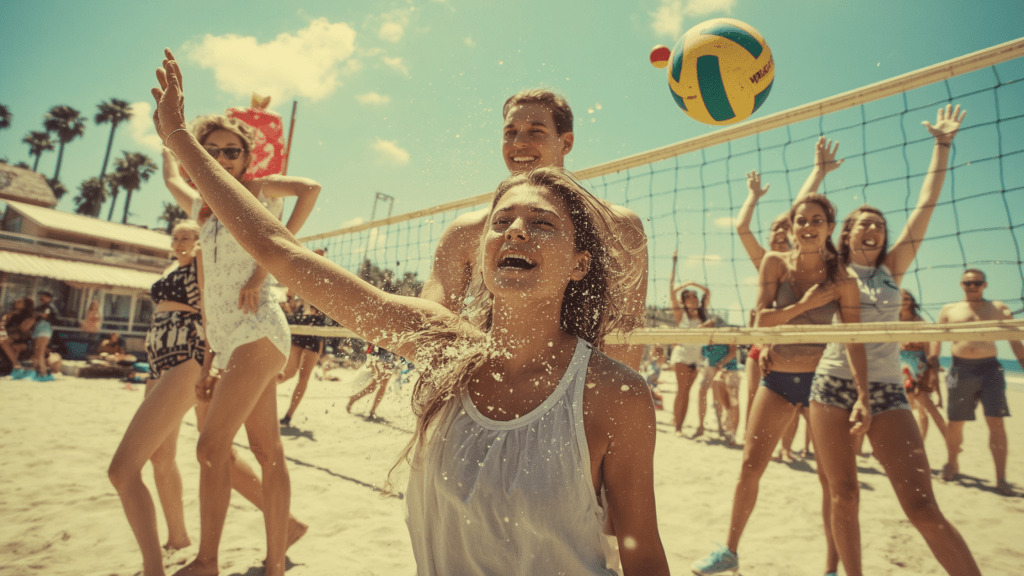
Summer campaigns now look like travel diaries with a marketing budget
There’s a very specific aesthetic dominating 2026:
“soft cinematic travel diary, but make it brand strategy.”
Think:
- handheld visuals;
- real people, real places;
- storytelling that feels like memory, not advertising;
- campaigns that don’t announce themselves as campaigns.
Because audiences don’t want to be sold to.
They want to accidentally fall into a brand experience and not feel manipulated afterward.
Summer 2026 is not about trends. It’s about emotional precision.
If earlier marketing was about:
“How do we look the most polished in the feed?”
Then 2026 summer content is asking:
“How do we feel like something worth remembering in a feed full of everything?”
The brands that win this season won’t be the loudest.
They’ll be the ones that feel like:
- a conversation you wanted to continue;
- a moment you didn’t scroll past;
- a story you didn’t realize you were part of;
And maybe that’s the real trend.
Everything else is just lighting.
If your summer content strategy still feels like a checklist of “post + trend + pray,” we might need to talk.
Email: info@ninabelletukhacreative.com
 Ninabelle Tukha Creative
Leave a comment