

What if your next campaign wasn’t built for millennials, urban moms, or Gen Z gamers — but for the anxious, the euphoric, or the creatively blocked?
Welcome to the Mood Economy — a brave (and slightly emotional) new world where marketing is driven not by demographics, but by emotions in motion. Where real-time mood data fuels smarter, more personalized campaigns. Where the “target audience” is no longer a static persona but a dynamic, deeply human mental state.

From Target Markets to Target Mindsets
Traditional marketing sliced people by age, zip code, job title. But let’s be honest: a 28-year-old software developer in Berlin and a 28-year-old fitness coach in Bali don’t click the same ads — especially not when one is sipping green juice and the other is on deadline with three bugs to fix.
Now imagine campaigns calibrated to real-time mood signals — stress, calm, joy, burnout, inspiration. With wearable tech, mood-sensing AI, voice tone analysis, even facial emotion detection, we’re entering an era where brands don’t just speak to us — they feel us.
Think Spotify’s mood-based playlists — but for ads, offers, and brand storytelling.
Your Ad is Too Happy. I’m Not.
If I’m in a doomscrolling spiral at midnight, don’t hit me with a chirpy “The Future Is Bright ” ad. Instead? Show me a soothing 10% off lavender oil. Maybe a calming ASMR-style explainer with soft motion graphics. Brands that emotionally match their audience — like a friend who just knows when to text “You okay?” — earn deeper trust (and more conversions).
Brands that don’t calibrate? Risk looking tone-deaf — or worse, annoying.
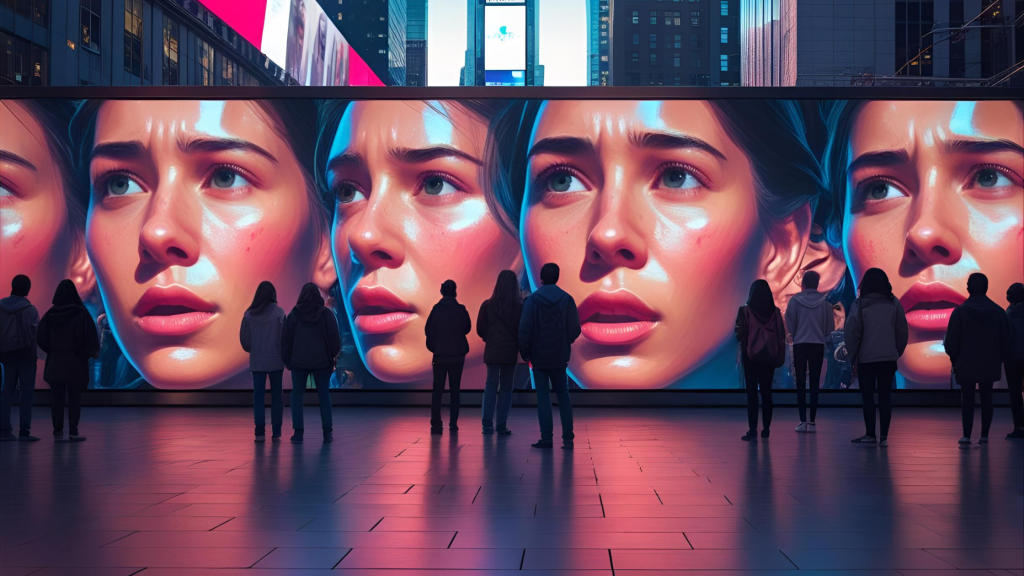
Creative Teams, Meet Your New Brief: Mood Metrics
Forget just personas. Now, you’ll need:
Emotionally intelligent copywriting: Words that adapt tone, not just message.
Visual design for moods: Soft palettes for calm, bold animation for excitement.
Dynamic content: One story, five emotional angles. Like a therapist, but with better lighting.
And yes, this means rethinking your content stack — using AI-generated variants, programmable visuals, and modular assets that can flex depending on what mood your audience is in (not just where they are or how old they are).
So, How Do You Get Into the Mood Game?
Start small, feel big:
1. Monitor emotional cues: Use social listening, chat sentiment, emoji analysis.
2. Segment beyond age: Try mood clusters: “the restless,” “the motivated,” “the creatively lost.”
3. A/B test tone, not just content: A relaxed headline vs. an energetic one can perform very differently depending on your user’s day.
Bonus tip: Don’t assume moods — respond to behavior. A user watching three calming videos isn’t in the mood for hype.

It’s Not Manipulation — It’s Emotional Design
We’re not talking creepy-level targeting. We’re talking about respectful resonance: creating content that doesn’t just interrupt, but understands. That doesn’t scream “Buy now!” — but whispers, “Hey, we get you.”
Mood Is the New Demographic
In the Mood Economy, attention isn’t won by who shouts the loudest, but by who listens best. Brands that tune into the emotional undercurrents of daily life will create campaigns that don’t just perform — they connect.
So, next time you brief a campaign, ask not just who you’re talking to, but how they’re feeling.
Because feelings? They convert.
Want to Emotionally Upgrade Your Brand?
At NInabelle Tukha Creative, we design campaigns that adapt to every mood swing — and we mean that in the nicest way possible. Let’s turn your next campaign into a moment of emotional clarity (or at least fewer eye-rolls).
Book your creative consult today.

 Ninabelle Tukha Creative
Leave a comment