
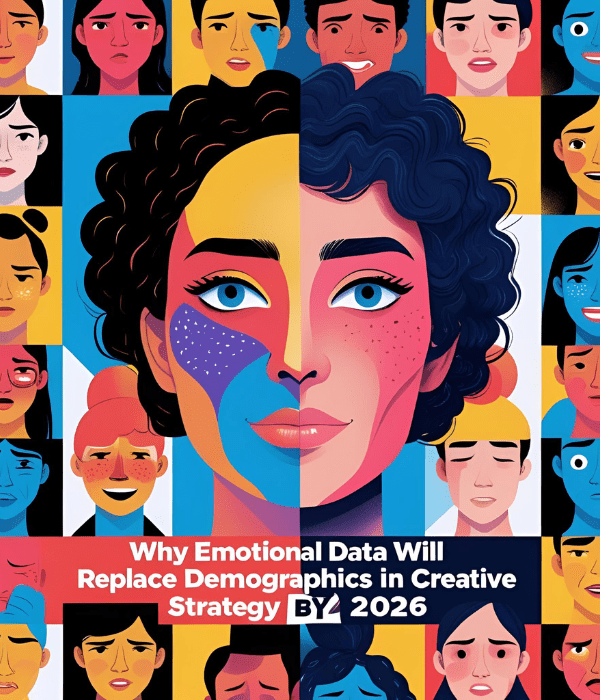
There was a time when marketers believed people made decisions based on their age, location, and whether or not they had a dog named Max.
Fast forward to 2026: those neat little boxes don’t work anymore.
Why? Because your 34-year-old Berlin-based customer might wake up feeling like a cottagecore fairy, spiral into corporate doomscrolling by noon, and end the day joining a digital rave hosted by a pixelated rabbit DJ.
Demographics can’t track that energy shift — but emotional data can.

Wait — What Is Emotional Data?
Glad you asked.
Emotional data is information that reveals what people feel in real-time. It’s not what’s on their birth certificate — it’s what’s in their mood playlist.
It’s tracked through:
- Emoji use;
- Tone of voice in captions and comments;
- AI-analyzed sentiment in stories and posts;
- Music streaming habits;
- Color palette preferences (yes, color moods matter now);
- And yes, what memes they double-tap at 3 a.m.
In short: it maps your audience’s shifting moods instead of their static labels.
Why Are Brands Moving Away from Demographics?
People’s interests don’t fit their age group anymore.
Your Gen Z cousin might collect vintage typewriters. Your Millennial sister loves hyperpop. People are mood-based, not age-based.
Micro-cultures > Macrocultures.
A 19-year-old Berlin poet might have more in common with a 40-year-old Brooklyn DJ than with her college classmates.
Brands need to tap into moods, not birth dates.
Real-time mood data performs better.
Campaigns built around what your audience feels right now outperform those built around who they are on paper.
Numbers don’t lie: mood-based content gets up to 3.7x higher engagement.

How Brands Are Already Using Emotional Data
Spotify Wrapped–style campaigns that track your mood playlists.
AI-generated mood boards for personalized product recommendations.
Ads that switch tone based on your current emotional state (yes, that’s real).
Community activations tied to sentiment spikes, like a surprise drop when people are collectively anxious—because retail therapy still works.
How to Build an Emotional Data Strategy in 2026
- Start with mood mapping tools (they exist, and no, they’re not creepy if used well).
2. Swap demographic personas for mood personas: The Midnight Meme Scroller, The Escapist Dreamer, The Nostalgic Cyberpunk.
3. Plan campaigns based on collective digital energy — not holidays or birthdays.
4. Test content tone, color, and music across moods — not markets.
Next Stop: 2026
In 2026, the most successful brands won’t target 28-year-olds in London.
They’ll target tired, overstimulated, aesthetic-obsessed escapists who want something absurdly specific at 11:53 p.m. on a Wednesday.
If you can catch their mood, you’ll catch their loyalty.
And if you need someone to help map that moodscape, well — hello darling, you’ve found them.
 Ninabelle Tukha Creative
Leave a comment