
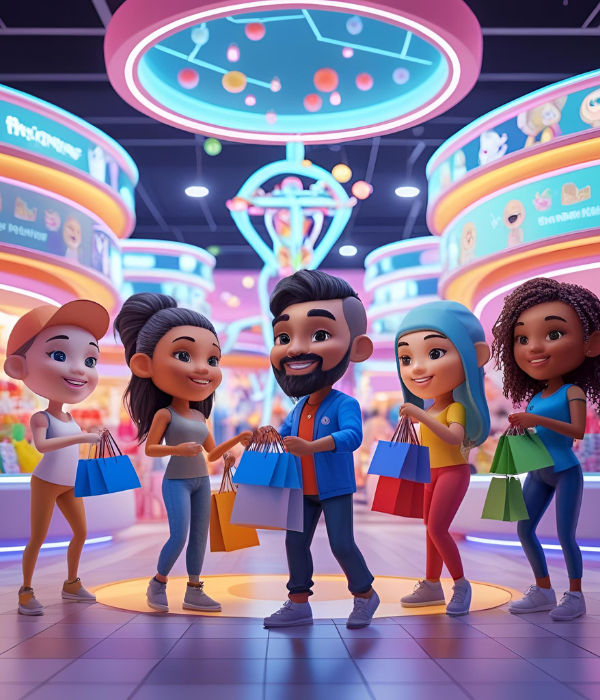
Remember when having a decent Instagram feed felt like enough? Cute grid, occasional Reel, maybe a Stories highlight or two. Fast forward to 2026 — that era is officially over. Welcome to Spatial Web 3.0: a new kind of internet where your brand doesn’t just post content, it builds spaces people can literally walk through, play in, and shop inside.
And no, this isn’t about chasing the Metaverse buzzword like it’s 2022 again. This is about practical, scalable, immersive digital spaces — and your brand will absolutely need one.

What Is Spatial Web 3.0 (and Why Should You Care)?
In simple terms, Spatial Web 3.0 turns the internet from flat, scrollable pages into interactive 3D environments you can navigate. Think less endless scrolling, more digital spaces where your customers can explore a virtual store, attend an AR-enhanced art show, or hang out at your brand’s virtual rooftop lounge (cocktails optional, but highly recommended).
It blends AR, VR, AI, and web-based 3D technology to create experiences that feel more like places than pages.
And the best part? Thanks to rapid tech upgrades, you won’t even need a VR headset. These immersive worlds can live right in your browser. Meaning your audience can jump in, from desktop to smartphone, no clunky goggles required.
Why Every Brand Will Need a Virtual Space by 2026
If you’re still wondering if this matters to you — here’s the short answer: it does. And here’s why:
Attention Is Moving to Spatial Experiences
In an online world oversaturated with static posts and stories, people crave experiences they can be part of. Virtual spaces offer something flat content never could — interaction, immersion, and actual presence. It’s not just content anymore; it’s a destination.
Web 3.0 Enables Direct, Real-Time Interaction
Imagine launching a product inside a digital pop-up your audience can walk through, chat in, or shop directly. Or hosting a private concert in a virtual lounge your VIP clients access with a digital key.
Spatial Web isn’t about passive views — it’s about active engagement.
The Data? Deliciously Detailed
These digital spaces capture organic behavioral data: what people linger on, where they explore, what they interact with. It’s real-time, real-behavioral insight without the creepy overreach.
Future-Proof Storytelling
In Spatial Web 3.0, your brand isn’t just seen — it’s experienced. You can turn campaigns into worlds, products into interactive stories, and brand values into virtual hangouts.
It’s where brand loyalty won’t just be earned. It’ll be lived.

What Brands Are Already Doing
Big players like Nike, Balenciaga, and Vans have dipped their toes into virtual spaces with digital showrooms, gamified brand quests, and 3D retail experiences.
But you don’t need a billion-dollar budget to play. Agencies are already designing micro-worlds for indie brands, artists, and niche communities. And it’s working.
How Creative Agencies Should Get Ready
If you’re a creative agency reading this (and you should be), now’s the time to:
Build partnerships with 3D/VR designers and AR developers
Upskill in WebGL, WebXR, and AI-based spatial design tools
Develop strategy packages for virtual activations and branded 3D experiences
Pitch concepts for immersive product launches, virtual events, and interactive digital campaigns
In other words — be the agency that designs the future, not the one chasing it.
Reimagining Presence in the Spatial Web
By 2026, if your brand—or your client’s—doesn’t have a presence in the Spatial Web, it may be like running a store with no address. Audiences are moving into immersive digital spaces, and now is the time to explore how your brand fits into that future.
Not sure where to begin?
Start by asking the right questions:
What experience should your audience feel in a virtual world?
What value can you bring beyond the physical?
You don’t need to build a world overnight—just start planning where you want to exist in this new one.
 Ninabelle Tukha Creative
Leave a comment